Atlantic Salt Air + UV: Why Daytona Beach RV Roofs Fail Faster Than Inland Florida
RV roof repair in Daytona Beach involves two failure modes that rarely combine anywhere else in Florida: Atlantic salt air that attacks lap sealant from outside, and UV exposure from open campground lots that accelerates chalking and cracking from above. Beachside parks within 0.5 miles of the Atlantic - like Sunshine Holiday RV Park on US-1 in Ormond Beach - see sealant failure 30-40% faster than inland Volusia County locations. RV Repair Daytona Beach performs roof reseals and spot repairs on-site at your campsite or driveway anywhere in Volusia County.
How Atlantic Salt Air Attacks Daytona Beach RV Roofs
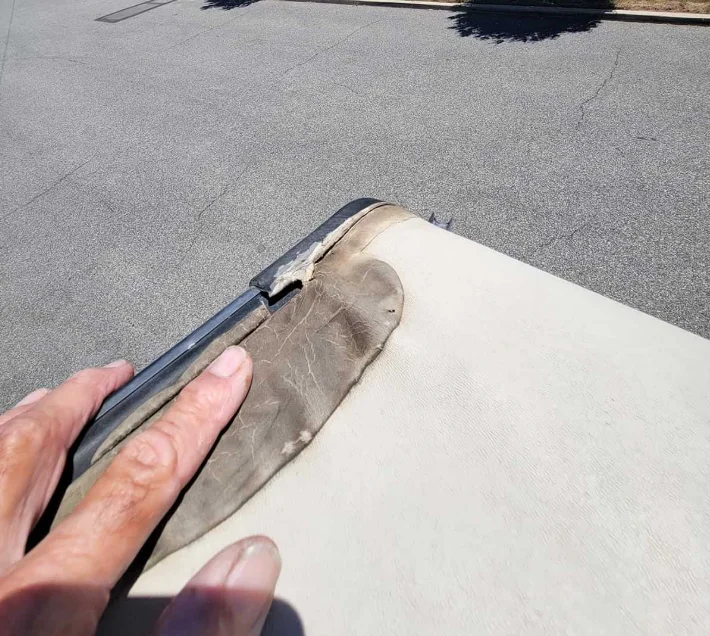
Atlantic salt air at parks within 0.5-3 miles of the ocean attacks Dicor lap sealant chemistry from the outside. Salt is hygroscopic - it draws moisture into the sealant surface, accelerating the breakdown of the polymer matrix that keeps the sealant flexible and adhered to the roof membrane.
A Daytona Beach beachside park RV owner replacing their sealant every 2-3 years is following the correct schedule. An inland Ocala or Gainesville RV owner might get 4-5 years from the same product. This is not a product failure - it is a reasonable response to a significantly more aggressive environment.
Sunshine Holiday RV Park Daytona North on US-1 in Ormond Beach is the highest-exposure location in our regular service area. The park is directly on US-1 less than a mile from the Atlantic.
RVs here see salt air throughout their entire roof, not just at penetration points. We recommend annual full-roof inspection and spot sealing for any rig that winters at this location.
A1A corridor parks in Daytona Beach and Ormond Beach - including beachside public campgrounds and private RV parks along the ocean road - have the same exposure profile. If your RV parks east of A1A for any extended period, treat your roof as if it is in a salt spray environment.
UV Exposure at Open Daytona Beach Campground Lots
International RV Park and Daytona Speedway RV Park both feature open lots with minimal tree canopy. Florida UV is intense year-round, and open exposure at Daytona Beach campgrounds means no shade relief from June through October when UV index regularly exceeds 11.
Dicor lap sealant without shade exposure chalks in 18-24 months at beachside open-lot Daytona campgrounds. The same product in a shaded inland Florida location might hold 36-48 months. Chalking is the first visible sign that the sealant has degraded - it has lost its flexibility and will crack under thermal expansion before water penetration happens.
Roof vent covers and AC unit base seals are the most critical penetrations to inspect annually at UV-exposed Daytona campground locations. These high-stress points flex with every temperature change.
A flexible sealant handles the flex; a chalked sealant cracks. We carry Dicor lap sealant and Dicor self-leveling on every service van for on-site reseal work.
EPDM rubber roofs have good UV resistance but are not immune. Chalking and surface oxidation develop over time, and the lap seams - where the EPDM membrane overlaps at edges and penetrations - are still sealed with Dicor products that have the same vulnerability to UV as on any other roof system.
Tomoka River State Park - The Moss Problem
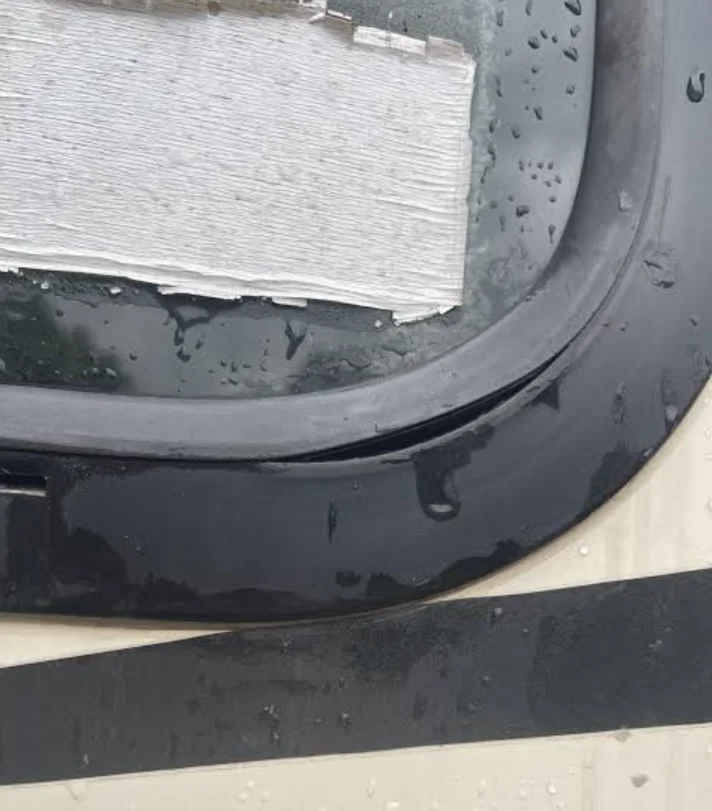
Tomoka River State Park in Ormond Beach presents the opposite challenge from open beachside campgrounds: too much shade. Live oaks and Florida pines create a dense canopy that keeps rigs cool and dramatically reduces UV exposure.
That sounds beneficial - and in some ways it is. But the shaded canopy creates ideal conditions for moss and lichen growth on rubber roofs.
Moss and lichen anchor to EPDM roofing membrane using rhizoid structures that penetrate the rubber surface. As the organisms grow, they exfoliate microscopic amounts of membrane material and their root acids chemically attack the EPDM.
A light coating of moss looks harmless. After two seasons, the membrane shows pit damage that compromises its waterproofing integrity.
The practical sign is ceiling staining along side walls where moss growth meets roof seams. The moisture penetration happens where the organic growth meets a lap seam and holds water against the seal. By the time staining appears inside, the moss has been growing for at least one season.
Annual roof inspection at Tomoka River State Park should include a moss and lichen check in addition to the standard sealant and seam inspection. Treatment with diluted bleach solution kills the organisms without damaging EPDM. Preventive treatment at the start of each snowbird season is cheaper than membrane section replacement.
Hurricane Season Roof Stress at Daytona Beach
Daytona Beach's direct Atlantic exposure means hurricane-season wind stress is higher than inland Volusia County parks. June through November gusts at beachside campgrounds are significantly stronger than at DeLand or Deltona. Roof seams that hold at 40 mph inland winds may fail at 60 mph Atlantic gusts.
The roof penetration seals at AC unit bases and vent covers are most vulnerable to wind stress. The AC unit is the largest structure on the roof and creates significant wind uplift in gust events. Sealant around the AC base seals needs to be inspected and refreshed after every significant tropical system, not just annually.
We recommend a post-storm roof inspection for any Daytona Beach RV that experienced sustained winds above 40 mph during hurricane season. This includes Volusia County tropical storm events, not just direct hurricane hits. Post-storm roof inspection from RV Repair Daytona Beach takes about 45 minutes and covers all penetrations, seams, and high-stress areas.
Speedway campground infield sites during race weekends experience a different kind of mechanical stress - crowd noise and track activity create ground vibration that fatigues high-stress roof penetrations over multiple events. Rigs that attend multiple Speedway events per year should add a mid-season roof inspection to their standard annual schedule.
What a Full RV Roof Reseal Covers in Daytona Beach
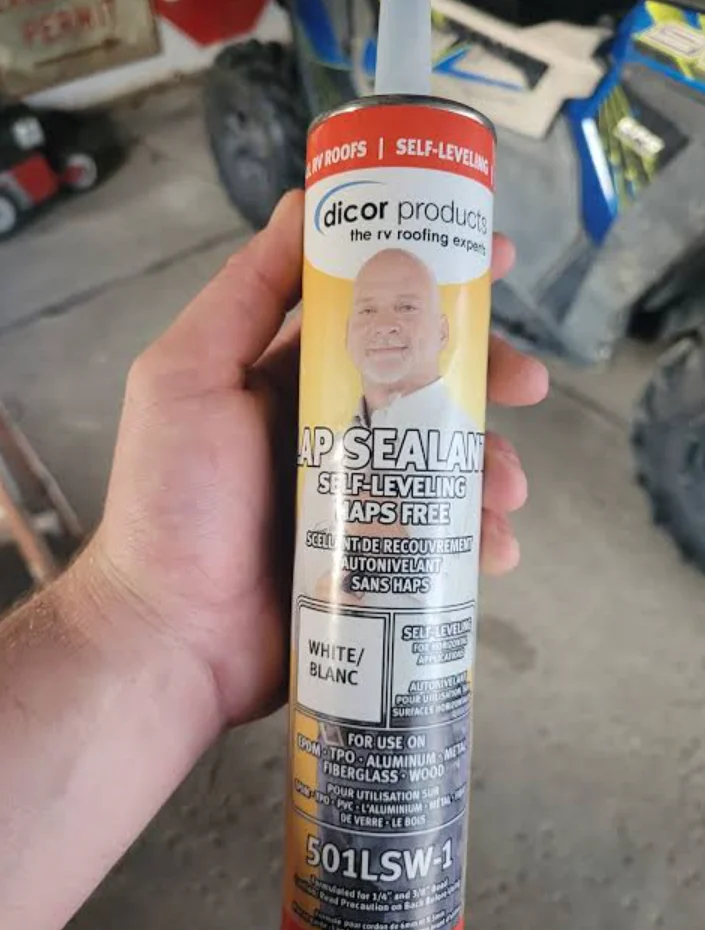
A full roof reseal from RV Repair Daytona Beach covers every penetration on the roof: all vent caps, the AC unit base seal, all plumbing vent covers, antenna bases, any external light fixtures, and the full perimeter seam where the roof membrane meets the sidewall.
We use Dicor lap sealant for all vertical and angled surfaces and Dicor self-leveling for flat horizontal surfaces. Dicor is the industry standard specifically because it is formulated for compatibility with EPDM, TPO, and fiberglass roof systems - generic sealants may not adhere correctly to RV roofing materials.
For severely weathered sealant, we remove the old material completely before applying new product. Applying new sealant over chalked, cracked sealant creates a surface-seal-only condition - the old sealant continues to degrade beneath the new layer and the repair fails faster than a clean application.
A full roof reseal at a Daytona Beach campsite or driveway takes about 3-4 hours for a standard Class A motorhome. We provide a written estimate before we start.
Most full reseals run $500-1,500 depending on the size of the roof and the number of penetrations. Spot repairs for 1-4 penetrations run $200-500.
RV Roof Repair Cost in Daytona Beach, FL
| Service | Typical Cost | Notes |
|---|---|---|
| Service Call + First Hour | $299 - $399 | Travel + diagnostics |
| Spot Leak Repair (Lap Sealant) | $200 - $500 | Up to 4 penetrations; Dicor lap sealant |
| Full Roof Reseal | $500 - $1,500 | All seams, vents, and antenna bases |
| Roof Vent Replacement | $100 - $300 | Fantastic Fan or MaxxAir vent cap |
| Roof Delamination Repair | $500 - $2,000 | Section repair; structural boards and membrane |
| Rubber Roof Coating | $800 - $2,000 | EPDM or TPO full coat; 10-15 ft coach |
| Skylight Replacement | $150 - $400 | Standard RV skylight; includes new seal |
Pricing note: Ranges shown are average costs for the Daytona Beach, FL market based on common repair scenarios. The exact cost of your repair depends on your RV make and model, the severity of the issue, and parts availability.
Only a technician on-site can provide an accurate estimate after inspecting your RV. A written estimate is provided before any work begins - you approve it before we start.
Atlantic Salt Air + UV: Why Daytona Beach RV Roofs - FAQ
How often should I reseal my RV roof in Daytona Beach?
Annual inspection is the minimum for any Volusia County RV. For RVs parked at beachside parks within a mile of the Atlantic - Sunshine Holiday, A1A corridor campgrounds, or Daytona Speedway RV Park - we recommend inspecting sealant twice a year (spring and fall). Full reseal frequency depends on what the inspection finds, but expect 2-3 year replacement cycles at beachside locations.
Can you repair my RV roof at Tomoka River State Park?
Yes. We service RVs at Tomoka River State Park and all Volusia County campgrounds and state parks.
We carry a ladder, Dicor sealant products, and all materials on the service van for on-site roof work. Same-day service is available throughout Volusia County.
What does RV roof repair cost in Daytona Beach?
Spot leak repair covering up to 4 penetrations runs $200-500. A full roof reseal covering all seams and penetrations on a standard Class A runs $500-1,500. Roof delamination repair is $500-2,000 depending on extent.
Rubber roof coating is $800-2,000. We provide a written estimate before any work begins.
What is the difference between moss damage and normal roof wear?
Normal roof wear shows as chalking, cracking, and stiffening of the sealant. Moss damage shows as green or black biological growth on the roof surface, with pit marks in the EPDM membrane beneath the moss.
Moss damage is most common at shaded campgrounds like Tomoka River State Park. If you see biological growth on your roof, do not wait for it to clear on its own - it will not.
How do I know if my RV roof is leaking at a campsite?
Interior staining on ceiling panels or along the top of side walls is the most visible sign. A soft or spongy feel when walking on the roof indicates moisture in the decking beneath the membrane.
Musty smell in the interior, especially after rain, often precedes visible staining. We use a moisture meter to map water intrusion behind walls and ceiling panels - it identifies leaks 3-6 months before interior staining appears.