RV Heat Pump Repair - Daytona Beach, FL
RV heat pump repair restores heating function on Dometic and Coleman Mach rooftop units when the heat pump mode fails to produce warm air, the reversing valve sticks, or the defrost cycle malfunctions. RV Repair Daytona Beach diagnoses heat pump faults on-site, including reversing valve solenoid testing and defrost board diagnosis, without pulling the unit from the roof.
Why RV Heat Pump Mode Fails While Cooling Still Works
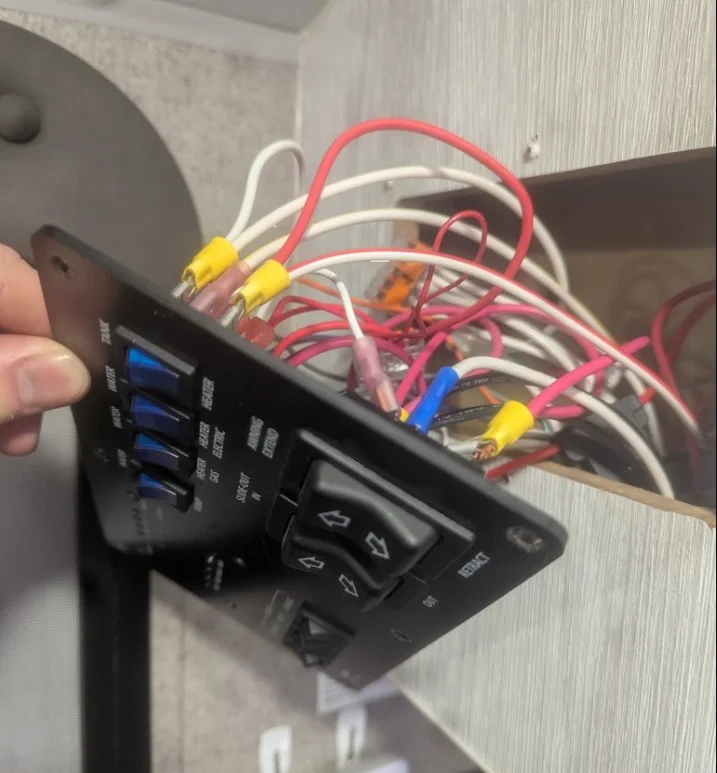
A heat pump works by reversing the refrigerant cycle - instead of moving heat from inside the coach to outside, it extracts heat from outside ambient air and delivers it inside. A reversing valve controlled by a solenoid switches the refrigerant flow direction between cooling and heating modes. When the reversing valve solenoid fails electrically or the valve body sticks mechanically, the unit operates in only one mode - typically cooling - regardless of what the thermostat commands.
This is why heat pump failure is a common complaint in early spring and late fall: the unit cooled perfectly all summer, but when the first cold night calls for heat, the thermostat triggers the heat pump mode and the reversing valve solenoid that was never exercised all season is now stuck in the cooling position. The compressor runs, the fan blows, but the air coming from the ceiling registers is cool rather than warm. A second common heat pump failure is defrost cycle lockout.
In cold, humid conditions, frost builds on the outdoor coil - the same evaporator coil that handles condensate in cooling mode. The defrost board is supposed to detect coil temperature and reverse the cycle briefly to melt the frost accumulation. A failed defrost board or stuck defrost thermostat allows ice to build until the coil is completely blocked, stopping heat output entirely.
How RV Repair Daytona Beach Diagnoses and Fixes Heat Pump Faults On-Site
Our diagnostic begins at the thermostat - we verify the heat pump signal wire (the O or B wire on heat pump thermostats) is present and carrying correct voltage when heat pump mode is commanded. A broken O wire at the roof penetration connector is a common failure point that produces heat pump lockout with no fault at the unit itself. If the O wire signal is correct at the unit, we test the reversing valve solenoid coil resistance and compare to the manufacturer spec.
A Dometic heat pump reversing valve solenoid reads approximately 12-15 ohms when functional. A reading of zero indicates a shorted coil; infinite resistance indicates an open winding. Both conditions require solenoid replacement, which we perform on-site with the unit in place on the roof when solenoid access permits.
Defrost board failures are confirmed by measuring the defrost thermostat output signal against the board's input command. A Coleman Mach or Dometic defrost board that receives a correct thermostat input but does not energize the reversing valve during defrost cycle is condemned and replaced. We carry the most common Dometic and Coleman Mach defrost board part numbers on the truck.
RV Air Conditioning Repair Cost in Daytona Beach, FL
| Service | Typical Cost | Notes |
|---|---|---|
| Service Call + First Hour | $299 - $399 | Travel + diagnostics anywhere in Volusia County |
| Start / Run Capacitor Replacement | $150 - $300 | Most common AC failure, same-day fix |
| Refrigerant Recharge | $200 - $500 | R-410A systems; technician |
| Blower Motor Replacement | $250 - $450 | Includes labor; part sourced from truck stock |
| Rooftop AC Unit Replacement | $1,200 - $2,800 | Dometic / Coleman Mach; 3-5 hr installation |
| Thermostat Replacement | $100 - $200 | Includes digital thermostat and wiring |
| Compressor Replacement | $800 - $2,000 | Full rooftop disassembly required |
Pricing note: Ranges shown are average costs for the Daytona Beach, FL market based on common repair scenarios. The exact cost of your repair depends on your RV make and model, the severity of the issue, and parts availability.
Only a technician on-site can provide an accurate estimate after inspecting your RV. A written estimate is provided before any work begins - you approve it before we start.
RV Heat Pump Repair - Common Questions
At what outside temperature does an RV heat pump stop working effectively?
Most RV rooftop heat pumps operate effectively down to approximately 40-45 degrees Fahrenheit outside ambient. Below that temperature, the outdoor coil cannot extract sufficient heat from the ambient air and heat output drops significantly. A supplemental electric heat strip wired in parallel with the heat pump - standard on most Dometic and Coleman Mach units - takes over as primary heat below the heat pump's effective range.
My RV heat pump blows cold air in heat mode - is the refrigerant low?
Low refrigerant is one possible cause but not the most common. A stuck reversing valve, a failed reversing valve solenoid, or a broken O wire at the thermostat or roof connector are more frequent causes of heat mode that produces cool air. We test all three before concluding a refrigerant fault, which requires gauge set confirmation of suction pressure in heat pump mode.
Can an RV heat pump be repaired without removing it from the roof?
Reversing valve solenoid replacement, defrost board replacement, and thermostat wiring repairs are all accessible from the roof or from inside through the ceiling air distribution box without pulling the full rooftop assembly. Only compressor replacement or refrigerant leak repairs that require accessing the sealed refrigerant circuit require pulling the full unit.
Should I run the heat pump or the electric heat strip for RV heating?
At outside temperatures above 45F, the heat pump is 2-3 times more efficient than the electric heat strip because it moves heat rather than generating it from electrical resistance. Below 40F, the heat strip is more effective because the heat pump can no longer extract adequate heat from cold ambient air. Modern thermostats with outdoor temperature lockout automatically switch between modes at the set crossover temperature.
What is the difference between an RV heat pump and a propane furnace?
A heat pump runs on shore power or generator power and produces no combustion byproducts, making it safe to run continuously in an enclosed campsite. A propane furnace is independent of electrical supply (except for the blower motor) and works in any temperature. For full-time or extended camping in cold climates, a propane furnace backup is recommended because heat pump efficiency drops sharply below 40F and propane furnaces maintain rated output down to -20F ambient.