RV Electric Heat Strip Repair - Daytona Beach, FL
RV Repair Daytona Beach diagnoses and replaces electric heat strips in RV air handler units on-site, covering Coleman Mach, Dometic, and Advent ducted and non-ducted systems. Heat strips fail from blown thermal cutoffs, burned element coils, or faulty sequencers - all of which leave the air handler blowing cold air on shore power. We carry thermal cutoff fuses and test sequencer operation before ordering element assemblies.
How RV Electric Heat Strips Work and Why Thermal Cutoff Fuse Failures Are So Common
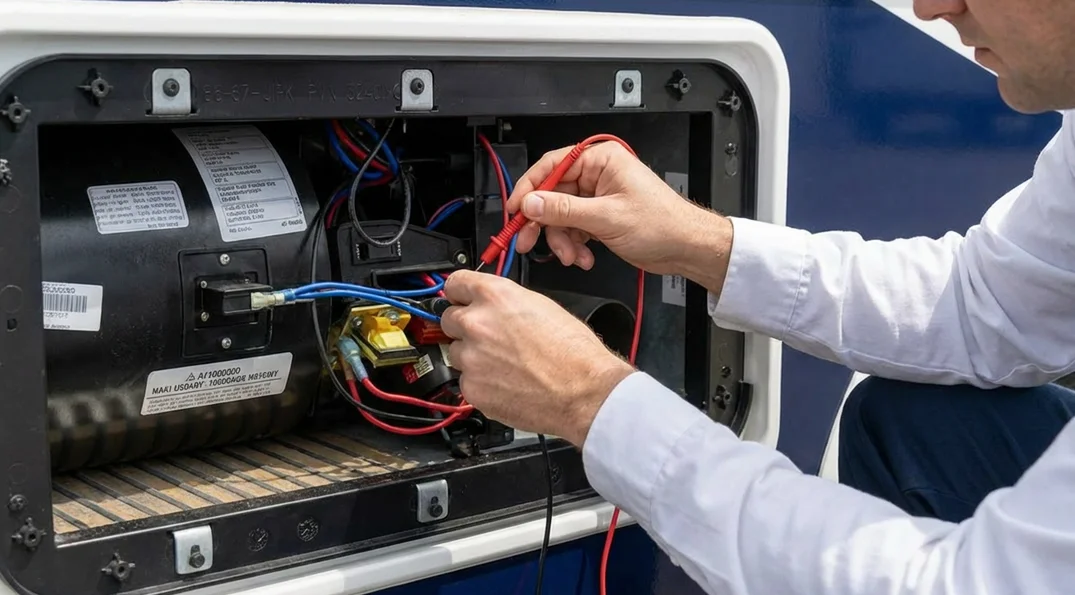
Electric heat strips in RV air handler units - Coleman Mach, Dometic, or Advent - consist of a nichrome resistance wire element, a thermal cutoff fuse, and a sequencer relay. The nichrome element converts 120V AC power to heat through resistance heating. The thermal cutoff fuse is a one-time safety device that opens permanently when element temperature exceeds its rating - typically 240 to 280 degrees Fahrenheit - protecting the surrounding materials from fire.
Once the thermal cutoff blows, the element is electrically disconnected and will not produce heat until the cutoff is replaced. This inexpensive part accounts for a large percentage of no-heat complaints on RV heat strips and is the first component we test on every call. The cutoff blows from one of two causes: inadequate blower airflow leaving the element unable to transfer heat, or low shore power voltage causing higher-than-normal current draw that trips the cutoff before the element itself reaches failure temperature.
Diagnosing RV Electric Heat Strip Failures - Thermal Cutoff, Sequencer, and Element in Order
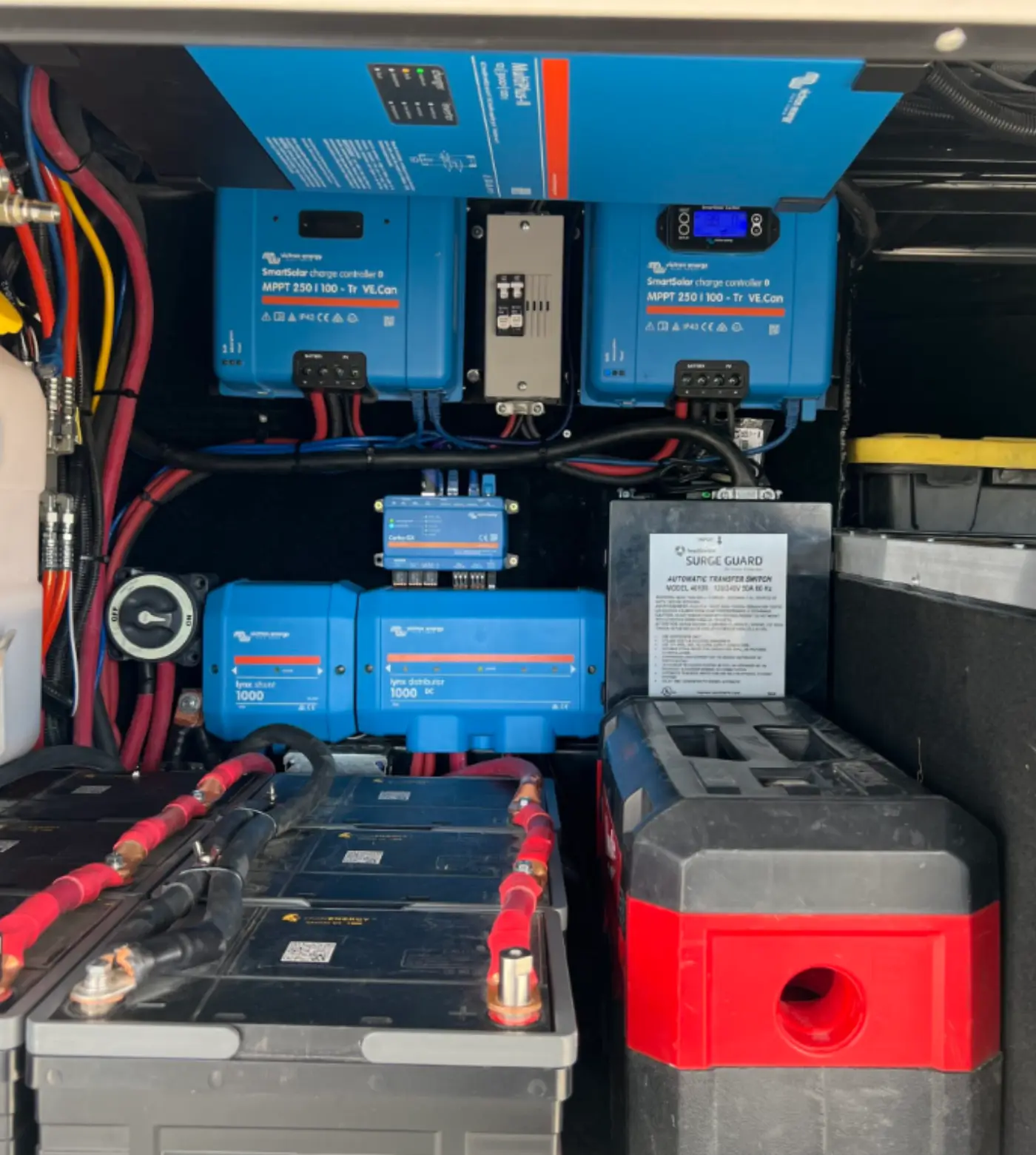
Our heat strip diagnostic tests three components in order of cost: the thermal cutoff fuse first, the sequencer second, and the nichrome element assembly third. The thermal cutoff is tested by measuring continuity across it with a DMM - an open reading confirms it has blown regardless of whether the element itself is good. A blown cutoff on an otherwise sound element means the root cause - inadequate airflow or low voltage - must be corrected before the new cutoff is installed or it will blow again.
After confirming or replacing the cutoff, we test the sequencer by measuring resistance across its contacts at rest and confirming continuity at rated activation temperature with a heat gun. A sequencer that remains open at operating temperature prevents the element from energizing. The element assembly is tested last - we measure continuity through the nichrome wire and insulation resistance from element to ground.
An open element confirms replacement, and low insulation resistance indicates a partial short causing nuisance breaker trips.
RV Heating System Repair Cost in Daytona Beach, FL
| Service | Typical Cost | Notes |
|---|---|---|
| Service Call + First Hour | $299 - $399 | Travel + diagnostics anywhere in Volusia County |
| Furnace Igniter or Pilot Repair | $150 - $300 | Suburban or Atwood; most common furnace fix |
| Thermocouple Replacement | $100 - $200 | Safety sensor; prevents no-heat failures |
| Control Board Replacement | $250 - $550 | Furnace or heat pump control board |
| Furnace Blower Motor Replacement | $200 - $400 | Suburban or Atwood blower assembly |
| Heat Pump Service (Dometic/Coleman Mach) | $200 - $500 | Diagnosis, coil clean, and refrigerant check |
Pricing note: Ranges shown are average costs for the Daytona Beach, FL market based on common repair scenarios. The exact cost of your repair depends on your RV make and model, the severity of the issue, and parts availability.
Only a technician on-site can provide an accurate estimate after inspecting your RV. A written estimate is provided before any work begins - you approve it before we start.
RV Electric Heat Strip Repair - Common Questions
Why did my RV electric heat strip stop working after I plugged into 30-amp shore power?
Most RV heat strips draw between 1,000 and 1,500 watts and require a solid 30-amp or 50-amp connection with no voltage drop - a weak pedestal connection or a long, undersized extension cord causes the element to overheat and trip the thermal cutoff fuse. The thermal cutoff is a one-time safety device that must be replaced once it blows, not reset. RV Repair Daytona Beach checks pedestal voltage under load and replaces the cutoff before energizing the strip again.
What is an electric heat strip sequencer and why does it matter?
A sequencer is a heat-activated relay that delays heat strip activation by a few seconds after the blower starts, preventing a large inrush current spike that would trip the breaker or damage the element. When a sequencer fails open, the heat strip never energizes even though the blower runs normally - a symptom that looks identical to a burned-out element. RV Repair Daytona Beach tests sequencer resistance and continuity before condemning the more expensive element assembly.
Can electric heat strips in an RV be repaired or do they always need full replacement?
The nichrome wire element itself is not field-repairable and must be replaced as an assembly when burned out. However, the thermal cutoff fuse is a separate, inexpensive part that accounts for a large share of heat strip no-heat complaints and takes under 30 minutes to replace. RV Repair Daytona Beach confirms element continuity with a DMM before recommending a full element swap, which keeps the repair cost as low as the problem allows.
How many watts does an RV electric heat strip draw and what shore power service does it require?
Most RV heat strip assemblies are rated at 1,320 to 1,500 watts, which draws 11 to 12.5 amps at 120V. A 30-amp shore power service can handle the heat strip alongside normal 120V loads if the total draw stays within 3,600 watts.
A 50-amp service provides more headroom. The caution is that some campground pedestals rated for 30 amps have undersized wiring that sags under full load - we always test pedestal voltage under actual heat strip load rather than relying on the pedestal rating label.
Is it worth repairing an older RV heat strip or should I replace the entire ceiling assembly?
If the ceiling assembly itself - the air distribution box, ducting, and fan housing - is in good condition, replacing only the failed heat strip components makes strong financial sense. The thermal cutoff fuse and sequencer are inexpensive parts, and even the nichrome element assembly costs a fraction of a new ceiling unit. Full ceiling assembly replacement is only warranted when the blower housing has cracked, the ducting has collapsed, or the unit is discontinued and parts are no longer available.