RV Furnace Igniter Repair - Daytona Beach, FL
RV Repair Daytona Beach replaces failed igniters in Dometic, Atwood, and Suburban RV furnaces at your campsite or driveway. Igniter failure is the single most common reason an RV furnace locks out after multiple ignition attempts. We test spark output with a gap tester, confirm control board trigger voltage, and replace the igniter electrode assembly on-site - most repairs take under an hour.
How RV Furnace Igniter Electrodes Fail - and Why the Control Board Is Often Blamed Incorrectly
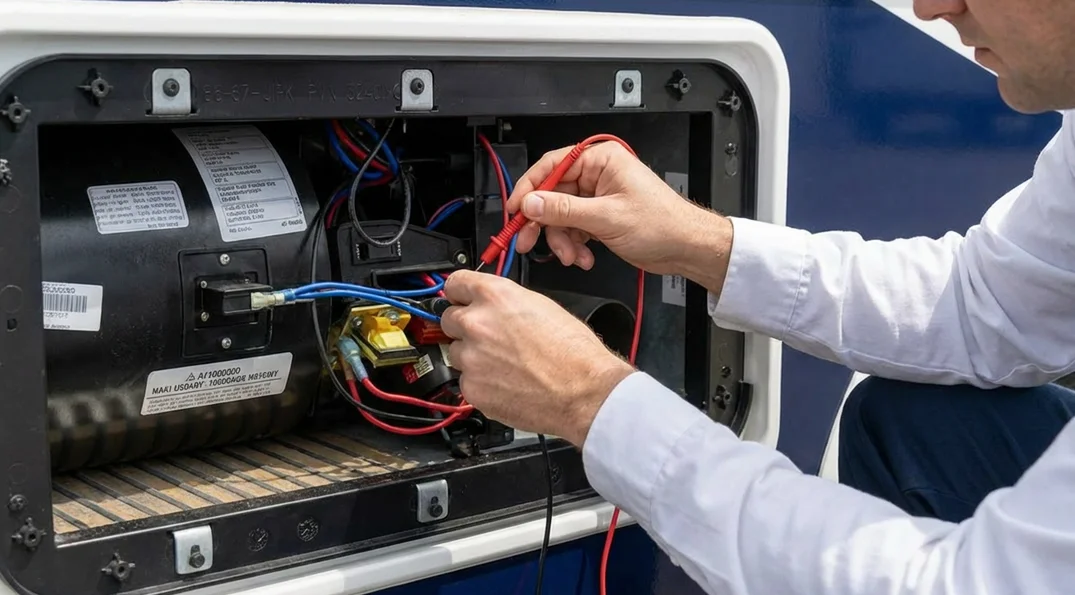
The direct spark ignition electrode in Suburban and Atwood RV furnaces is a ceramic-insulated steel rod that produces a high-voltage arc across a 0.125 to 0.150 inch gap during each ignition attempt. Three failure modes account for the vast majority of igniter problems. First, moisture intrusion during storage corrodes the electrode tip and ground shield, widening the effective gap beyond the range the transformer can reliably bridge.
Second, thermal cycling cracks the ceramic insulator, allowing the spark to arc to ground through the insulator rather than jumping the gap. Third, the igniter wire insulation becomes brittle and develops a pinhole, grounding the spark before it reaches the electrode. In all three cases, the symptom - no spark, inconsistent spark, or spark that stops mid-sequence - is identical to a control board failure, which causes technicians to replace the more expensive board unnecessarily.
Our technicians test spark output directly at the electrode before condemning the board.
Testing the Igniter System - Electrode, Wire, and Control Board in Sequence
Our igniter diagnostic tests three components in order of cost: electrode gap first, wire insulation integrity second, and control board trigger voltage third. The electrode is inspected visually for cracks and cleaned with a wire brush to remove corrosion before any gap measurement is taken - a significant number of intermittent igniter complaints are resolved by cleaning alone. If the electrode gap measures outside the 0.125 to 0.150 inch specification, we adjust or replace the electrode assembly.
The igniter wire is tested for insulation integrity by measuring resistance to ground - a reading below 100,000 ohms indicates a pinhole grounding the circuit. Only after the electrode and wire test clean do we measure control board trigger voltage at the igniter terminal during a live ignition attempt. Finding 24V present at the terminal with no spark confirms the electrode as the fault.
Finding no voltage at the terminal confirms a board output failure. This sequence prevents replacing a good board when the igniter is the actual fault.
RV Heating System Repair Cost in Daytona Beach, FL
| Service | Typical Cost | Notes |
|---|---|---|
| Service Call + First Hour | $299 - $399 | Travel + diagnostics anywhere in Volusia County |
| Furnace Igniter or Pilot Repair | $150 - $300 | Suburban or Atwood; most common furnace fix |
| Thermocouple Replacement | $100 - $200 | Safety sensor; prevents no-heat failures |
| Control Board Replacement | $250 - $550 | Furnace or heat pump control board |
| Furnace Blower Motor Replacement | $200 - $400 | Suburban or Atwood blower assembly |
| Heat Pump Service (Dometic/Coleman Mach) | $200 - $500 | Diagnosis, coil clean, and refrigerant check |
Pricing note: Ranges shown are average costs for the Daytona Beach, FL market based on common repair scenarios. The exact cost of your repair depends on your RV make and model, the severity of the issue, and parts availability.
Only a technician on-site can provide an accurate estimate after inspecting your RV. A written estimate is provided before any work begins - you approve it before we start.
RV Furnace Igniter Repair - Common Questions
How do I know if the furnace igniter is bad or if it is the control board not firing it?
A technician checks for 24V AC output at the igniter terminal on the control board during the trial-for-ignition sequence - if voltage is present but there is no spark, the igniter electrode or its wire is the fault. If no voltage appears at that terminal, the control board itself is not triggering the igniter and the board is suspect. RV Repair Daytona Beach carries a DMM and spark tester on every call to separate these two faults before ordering parts.
What causes RV furnace igniters to fail prematurely?
Corrosion on the electrode tip from moisture and combustion byproducts is the most common cause, especially in furnaces that sit unused for months between seasons. Physical cracks in the ceramic insulator allow the spark to ground out before it jumps the gap, which the control board reads as a no-ignition condition. Replacing the electrode assembly every three to five seasons is cheaper than a lockout failure mid-trip in cold weather.
My furnace sparks but still will not light - is the igniter still the problem?
Not necessarily - visible spark at the electrode means the igniter is working, so the fault shifts to propane supply (low pressure, closed valve) or the gas valve not opening on the board's command. RV Repair Daytona Beach checks for propane pressure at the valve inlet and tests the gas valve coil resistance and 12V trigger signal when spark is confirmed present. This multi-point check ensures you are not replacing a good igniter when the gas valve is the actual failure.
How often should the igniter electrode be replaced as preventive maintenance on an RV furnace?
A proactive replacement interval of every three to five years is a reasonable preventive maintenance schedule for Suburban and Atwood furnace igniters, especially in rigs used primarily in humid coastal or storage climates where moisture accelerates electrode corrosion. The igniter electrode assembly itself is an inexpensive part, and replacing it before failure eliminates the risk of a no-heat situation on a cold night mid-trip.
Can a weak chassis battery cause the RV furnace igniter to fail to spark?
The high-voltage spark is generated by the DSI transformer on the control board, which is powered by 12V from the coach battery. A battery voltage below 10.5V during the ignition sequence reduces the transformer output voltage and produces a weak spark that fails to reliably ignite the propane-air mixture at the burner. We test 12V at the furnace connector during a live ignition attempt - not just at rest - because the furnace blower motor pulls current simultaneously and can reveal a battery or wiring problem that resting voltage does not show.