Propane Regulator Test & Replacement - Daytona Beach, FL
RV Repair Daytona Beach tests propane regulator output pressure on-site using a calibrated manometer, confirming whether your two-stage regulator is delivering the correct working pressure of 11 inches water column to your appliances. When the regulator tests out of spec or shows symptoms of freezing, sticking, or vent blockage, we replace it on the same visit using stock regulators for POL and ACME inlet configurations. Service is available at any Daytona Beach campsite, storage location, or driveway throughout Volusia County.
How a Two-Stage RV Propane Regulator Works and Why It Fails
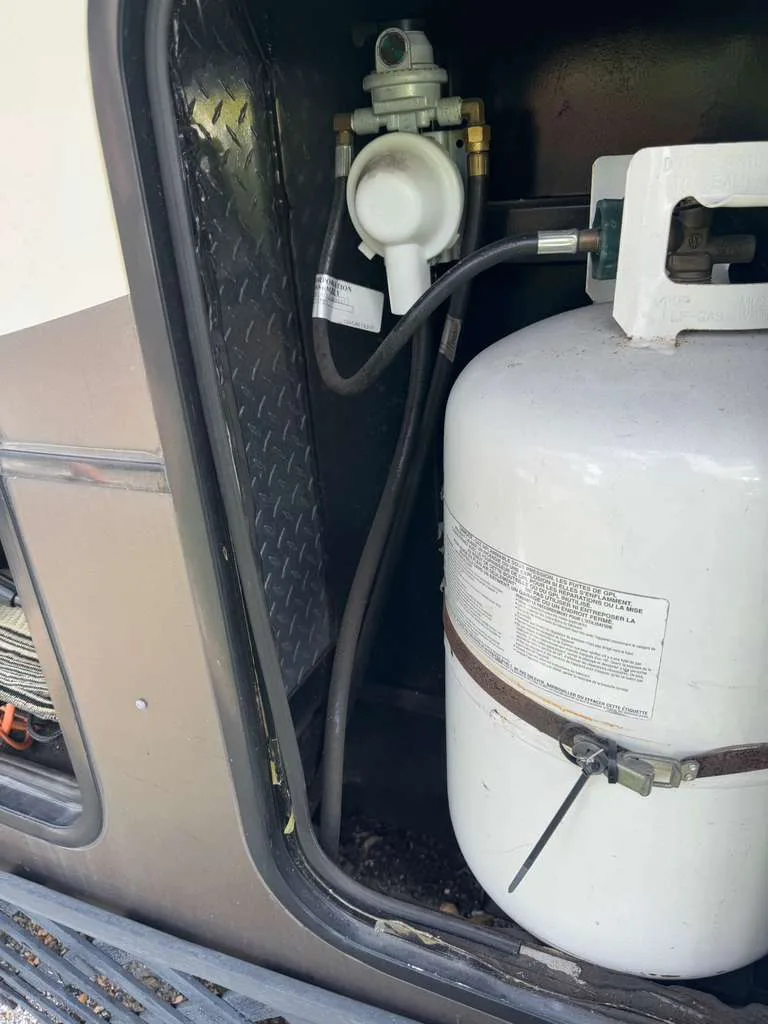
Most RV propane systems use a two-stage regulator that reduces tank pressure in two steps. The first stage drops the high variable pressure from the tank - which ranges from 50 to 200 PSI depending on temperature - down to an intermediate 10 PSI. The second stage reduces that 10 PSI to the 11 inches water column working pressure your appliances expect.
Regulators fail in several ways. The diaphragm can stiffen or crack, causing the second stage to deliver low or inconsistent pressure. The vent screen can clog with insects or debris, causing the regulator to lock up.
In cold morning conditions during Bike Week, moisture in the LP gas can freeze at the first stage orifice and restrict flow entirely. Each failure mode produces different symptoms - which is why testing output pressure with a manometer is the only reliable way to diagnose a regulator.
RV Repair Daytona Beach reads output pressure under two conditions: static (no appliance running) and dynamic (furnace or water heater running to simulate load). A regulator that tests fine at static pressure but drops under load has a first-stage capacity problem that static pressure alone would miss.
Symptoms That Point to a Failed Regulator Rather Than Other Propane Issues
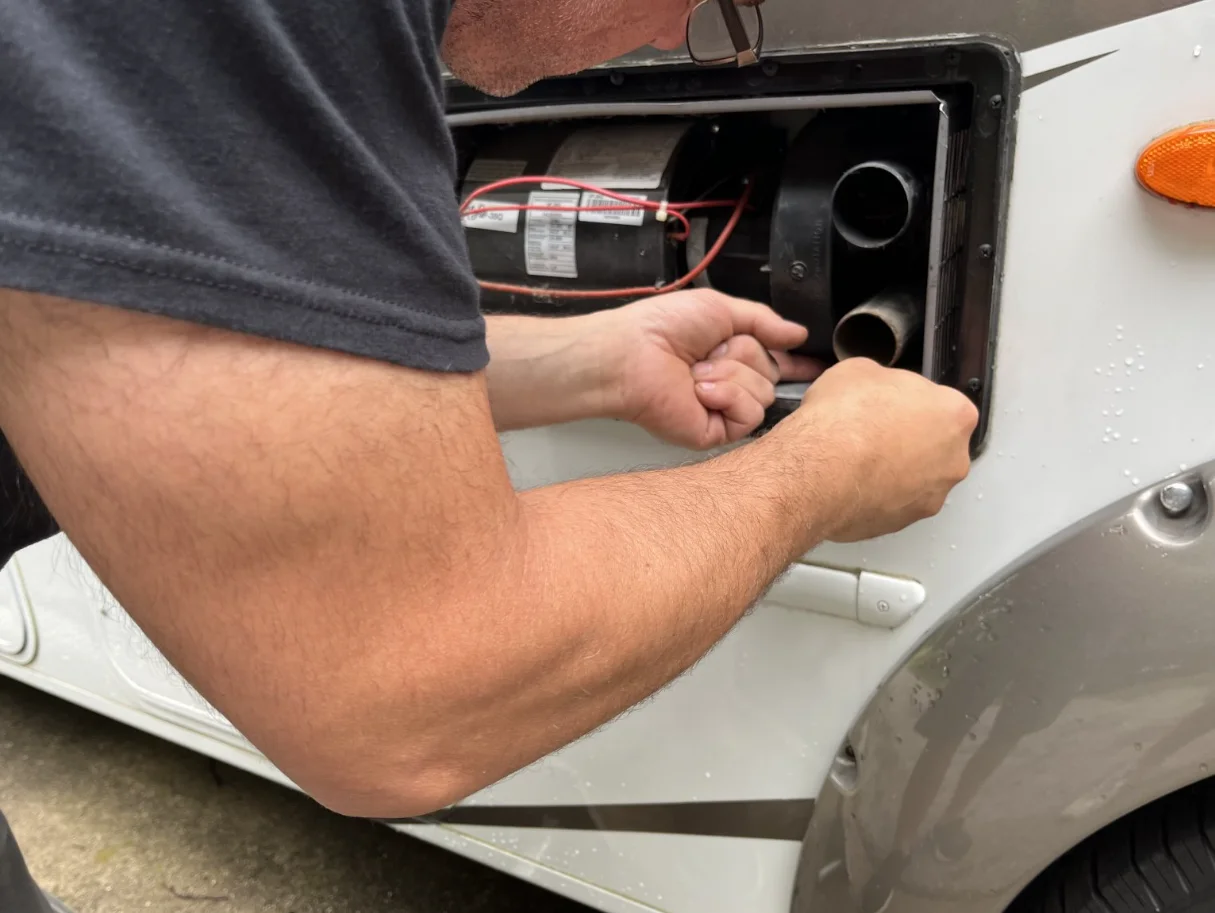
A failing regulator produces a distinct pattern of symptoms. Appliances that work normally on a full tank but start failing when the tank drops below half indicate a first-stage capacity issue. A furnace that lights briefly then shuts off on the high-limit sensor while the stove works fine suggests the furnace is drawing more pressure than the regulator can sustain.
Stove burners with low, yellow-orange flame instead of crisp blue flame point to low delivery pressure. A water heater that heats slowly or cycles on and off under normal conditions can also be a pressure symptom. These are different from appliance-specific failures - the shared link to pressure is what identifies the regulator as the cause.
Daytona Beach's cold March mornings during Speedweeks and Bike Week add a freezing failure mode not common in warmer months. If your propane appliances stop working entirely on a cold morning and recover as the day warms up, freeze-up at the first stage is the likely culprit. We carry Sta-Bil propane system anti-moisture treatment and stock replacement regulators for the most common RV configurations.
What We Carry and How Replacement Works On-Site

RV Repair Daytona Beach stocks standard two-stage RV regulators in both POL (older CGA 510 thread) and ACME (newer CGA 600) inlet configurations, covering the majority of RV propane systems in Volusia County. For dual-tank systems with an automatic changeover regulator, we carry common changeover models as well.
Replacement takes 20 to 30 minutes. We shut off the tank valve, remove the old regulator, install the new unit with the correct thread sealant on the POL fitting, and confirm the regulator vent is oriented downward to prevent moisture intrusion. After installation, we measure output pressure under both static and dynamic load conditions before lighting any appliances.
The regulator serial number and installation date are logged on a service sticker inside the propane compartment. For snowbirds at International RV Park and Tomoka River State Park who run propane continuously for four to six months per season, we note the next recommended inspection date as well.
RV Propane System Service Cost in Daytona Beach, FL
| Service | Typical Cost | Notes |
|---|---|---|
| Service Call + First Hour | $299 - $399 | Travel + diagnostics anywhere in Volusia County |
| Regulator Output Pressure Test | $75 - $125 | Manometer test; static and dynamic load conditions |
| Two-Stage Regulator Replacement (POL) | $150 - $275 | Standard two-stage; includes post-install pressure test |
| Two-Stage Regulator Replacement (ACME) | $175 - $325 | ACME inlet; includes post-install pressure test |
| Automatic Changeover Regulator Replacement | $200 - $375 | Dual-tank; includes changeover function test |
| Pre-Event Propane System Check | $150 - $200 | Regulator test + leak check before Speedweeks or Bike Week |
Pricing note: Ranges shown are average costs for the Daytona Beach, FL market based on common repair scenarios. Exact cost depends on your RV make and model, the severity of the issue, and parts availability. A written estimate is provided before any work begins - you approve it before we start.
Propane Regulator Test & Replacement - Common Questions
How do I know if my RV propane regulator needs replacement?
Common signs are appliances that work on a full tank but fail as the tank gets below half, a furnace that lights and shuts off quickly, stove burners with weak or yellow flame, or no propane delivery at all on cold mornings. The only definitive test is measuring output pressure with a manometer - visual inspection of the regulator exterior rarely reveals internal diaphragm or orifice failure.
Can my regulator freeze in Daytona Beach weather?
Yes, during the cold mornings of March Speedweeks and Bike Week, ambient temperatures can drop to the high 30s. LP gas contains trace moisture that can freeze at the first-stage orifice or vent when demand is high and temperature is low.
The fix is usually anti-moisture fuel treatment or regulator replacement if the freeze damage is permanent. It is more common in RVs with older regulators or in rigs that run furnaces continuously overnight in cold weather.
What is the difference between a POL and ACME regulator fitting?
POL (Prest-O-Lite) is the older left-hand threaded brass connection used on most RV tanks made before 2002, requiring a wrench to connect and disconnect. ACME is the newer hand-tightened connection with a right-hand thread and a built-in check valve.
Many RVs have been upgraded to ACME but still have the original POL regulator. We confirm your tank valve type before ordering a replacement regulator to ensure the correct inlet.
How long should an RV propane regulator last?
Most regulators are rated for 15 to 20 years of service life, but Daytona Beach's coastal humidity, UV exposure, and thermal cycling compress that lifespan. Regulators on RVs that camp at beachside parks or store outdoors year-round can show diaphragm stiffening in 8 to 10 years. If your RV is more than 10 years old and has never had the regulator replaced, testing output pressure is worthwhile even without obvious symptoms.
Do you carry regulators in stock or do you have to order them?
We carry standard two-stage regulators in both POL and ACME inlet configurations on the service van. Automatic changeover regulators and high-flow models for large Class A motorhomes may require a next-day parts order, but standard replacements for Class B, C, and travel trailer propane systems are available same-visit at any location in Volusia County.
Can a bad regulator cause my RV refrigerator to stop working on propane?
Yes. A refrigerator running on propane requires a stable 11 inches water column working pressure to maintain proper burner operation. If the regulator delivers low or fluctuating pressure, the refrigerator burner lights briefly and then shuts off on the safety thermocouple.
This can be misdiagnosed as a refrigerator failure when the regulator is the actual cause. We test pressure before diagnosing any propane appliance to rule out the regulator first.