RV Lap Sealant Inspection and Recoat - Daytona Beach, FL
An annual RV lap sealant recoat removes cracked or lifting sealant from every roof penetration and reapplies fresh Dicor self-leveling compound to stop water intrusion before it starts. RV Repair Daytona Beach performs the full roof sealant inspection and spot recoat on-site, covering every vent, antenna, AC unit, and front and rear cap seam in a single visit - the most cost-effective roof maintenance available.
Why Lap Sealant Fails and What the Failure Timeline Looks Like
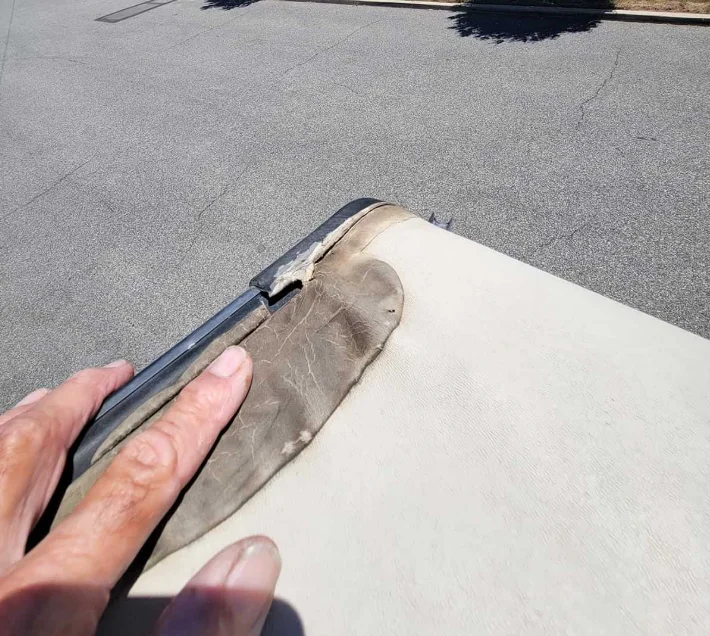
Dicor self-leveling lap sealant has a nominal service life of 3-5 years in a temperate climate and 2-3 years in a high-UV southern climate where ozone concentration and UV index are elevated year-round. Sealant that is applied to a roof in Florida or Texas in June is exposed to UV levels that would take two summers to accumulate in the Pacific Northwest. Inspection intervals should be adjusted for local climate.
Sealant failure begins as surface crazing - fine surface cracks that do not yet penetrate full depth. At this stage the sealant still provides limited water resistance because the crack faces are still in contact during dry conditions. As the cracks widen with thermal cycling - the sealant expands in heat and contracts in cold, working the cracks open progressively - they begin allowing water entry during rain events.
Failure typically progresses from the sealant edges inward. The perimeter of any sealant bead is the thinnest cross-section and loses adhesion first, which creates a gap between the sealant and the roof membrane or fixture flange that channels water directly under the sealant rather than deflecting it off.
How RV Repair Daytona Beach Inspects and Recoats Lap Sealant On-Site
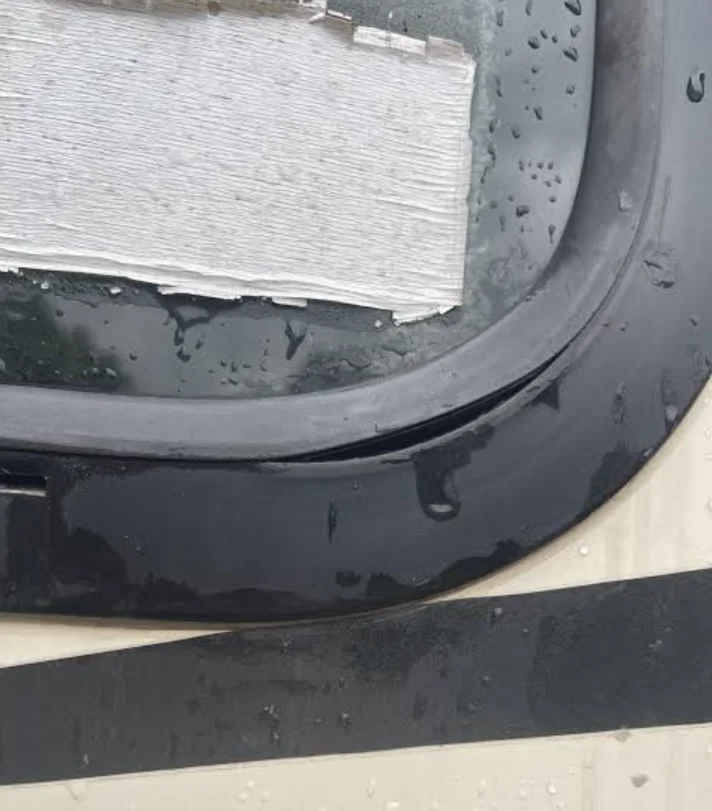
The inspection covers every sealant joint on the roof: AC unit perimeter flange, all vent covers and frames, the antenna base plates, solar panel mounting feet, the front cap rail, rear cap rail, and all sidewall-to-roof seam joints. Each joint is probed by pressing fingertip pressure at the sealant edge to check adhesion and by flexing the sealant body to reveal subsurface cracks that are not visible at the surface. Failed sealant is removed by hand peeling and then cleaned from the substrate using a plastic scraper and denatured alcohol.
Self-leveling Dicor sealant cannot be successfully applied over existing failed sealant because the adhesion is to the failed compound rather than the membrane surface. Complete removal of failed material before recoating is the step that determines whether the new sealant will last its rated service life. Fresh Dicor self-leveling sealant is applied in a continuous bead that overlaps the fixture flange edge by at least 1 inch on all sides and feathers to a smooth edge against the membrane.
The service visit is timed to avoid rain for at least 4 hours after application, which is the minimum cure time for Dicor self-leveling to develop initial water resistance.
RV Roof Repair Cost in Daytona Beach, FL
| Service | Typical Cost | Notes |
|---|---|---|
| Service Call + First Hour | $299 - $399 | Travel + diagnostics anywhere in Volusia County |
| Spot Leak Repair (Lap Sealant) | $200 - $500 | Up to 4 penetrations; Dicor lap sealant |
| Full Roof Reseal | $500 - $1,500 | All seams, vents, and antenna bases |
| Roof Vent Replacement | $100 - $300 | Fantastic Fan or MaxxAir vent cap |
| Roof Delamination Repair | $500 - $2,000 | Section repair; structural boards and membrane |
| Rubber Roof Coating | $800 - $2,000 | EPDM or TPO full coat; 10-15 ft coach |
| Skylight Replacement | $150 - $400 | Standard RV skylight; includes new seal |
Pricing note: Ranges shown are average costs for the Daytona Beach, FL market based on common repair scenarios. The exact cost of your repair depends on your RV make and model, the severity of the issue, and parts availability.
Only a technician on-site can provide an accurate estimate after inspecting your RV. A written estimate is provided before any work begins - you approve it before we start.
RV Lap Sealant Inspection and Recoat - Common Questions
How often should I reseal my RV roof penetrations?
Inspect annually at minimum - most RV manufacturers recommend a spring inspection before the camping season and a fall inspection before storage. In high-UV climates (Florida, Texas, Arizona), inspect every 6 months. Apply fresh sealant wherever the existing compound shows cracking, lifting edges, or hardness that prevents compression when pressed.
Can I apply new lap sealant directly over old sealant?
Only if the existing sealant is still firmly adhered, flexible, and fully intact with no cracking or lifted edges. Applying new sealant over failed sealant bonds the new compound to a failing substrate that will detach and take the new sealant with it within one season. When in doubt, remove the old sealant completely and start fresh.
What happens if I skip annual sealant inspection?
A small sealant failure at one roof vent that goes uninspected for two seasons allows moisture to migrate through the ceiling insulation into the wood decking beneath the membrane. Once the decking softens, the membrane loses its substrate bond and delamination begins. The repair escalates from a $150 sealant recoat to a $1,500-$4,000 decking and membrane replacement.
What brand of RV lap sealant does RV Repair Daytona Beach use?
RV Repair Daytona Beach uses Dicor self-leveling lap sealant on EPDM and TPO membrane roofs and Dicor non-leveling sealant on vertical surfaces and fiberglass roof applications. Dicor is the most widely specified RV roof sealant in the industry and is compatible with all major membrane types. We do not use silicone caulk on RV roofs - silicone is not compatible with EPDM membrane and prevents future repair adhesion.
How much does a full-roof lap sealant recoat cost?
The service call is $299-$399 and covers travel plus the first hour. A spot recoat of 5-10 penetrations on a typical 30-foot coach is completed within the first hour. Coaches requiring full-perimeter seam recoating in addition to penetration recoating are quoted additional labor time in writing before work begins.