RV Delamination Assessment - Daytona Beach, FL
An RV delamination assessment inspects the sidewalls, roof, and slide rooms for delamination caused by water intrusion into the wall sandwich - the separation between the fiberglass skin and the foam or luan core. RV Repair Daytona Beach performs a full-rig delamination assessment on-site using moisture meters and raking-light visual inspection, delivering a written scope report with repair cost estimates for every affected zone.
What RV Delamination Is and Why It Progresses So Quickly
RV sidewall construction is a sandwich panel - an outer fiberglass skin bonded to a foam or luan wood core, which is bonded to an inner aluminum or fiberglass wall skin. The bond between the outer skin and the core depends on a continuous adhesive layer that holds the panel rigid. When water enters the core through a failed roof seam, window seal, or sidewall seam, it saturates the adhesive layer and destroys the bond between the skin and the core.
Once the adhesive bond fails, the outer fiberglass skin separates from the core and begins to bubble outward, forming the characteristic wave or ripple pattern visible in delaminated sidewalls. The process accelerates rapidly because the separated air gap between the skin and core allows water to migrate freely throughout the delaminated zone rather than being confined to the original intrusion point. A delaminated area that is 2 square feet in spring can expand to 12 square feet by fall if left untreated.
Luan wood core panels delaminate faster than foam core panels because luan absorbs water readily and swells, breaking down the adhesive bond across the entire saturated zone simultaneously. Foam core panels resist water absorption better but lose structural rigidity once the outer skin bond fails because the foam has no internal tensile strength to hold the panel shape without the skin bond.
How RV Repair Daytona Beach Assesses Delamination Severity and Repair Scope
The assessment begins with a raking-light visual survey of all sidewall panels, the roof perimeter, and slide room exterior surfaces. A work lamp held at 10-15 degrees from the panel surface reveals delamination bubbles and waves that are invisible under flat overhead lighting because the light catches the skin deviation at a sharp angle. Every delaminated zone is marked and measured on a coach schematic.
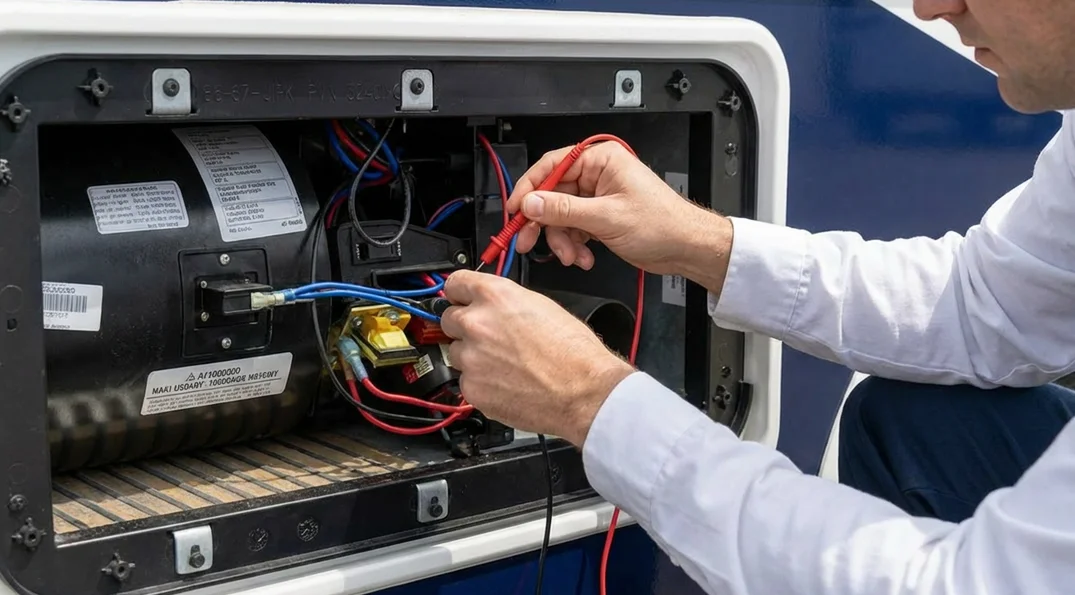
A moisture meter is inserted through the fiberglass skin at the delamination boundary to measure core moisture content. Readings above 40% in a luan core indicate active saturation requiring core removal and replacement before any skin re-bonding will adhere. Readings below 20% in a delaminated zone that is visually obvious indicate that the core has dried but the adhesive bond was permanently destroyed - these zones require re-bonding with structural two-part epoxy injection.
The written report categorizes each zone as dry-delamination (rebondable by epoxy injection), wet-delamination (requiring core removal and replacement), or full-panel-replacement (structural damage beyond patch repair). Repair cost estimates for each category are provided with the report so you can prioritize repairs and insurance claim documentation accurately.
RV Water Damage Repair Cost in Daytona Beach, FL
| Service | Typical Cost | Notes |
|---|---|---|
| Service Call + First Hour | $299 - $399 | Travel + diagnostics anywhere in Volusia County |
| Water Damage Assessment and Report | $150 - $300 | Moisture meter mapping, leak source ID, written report |
| Subfloor Soft Spot Repair (small) | $400 - $900 | Plywood section replacement; under 4 sq ft |
| Subfloor Replacement (large section) | $800 - $2,500 | Structural subfloor and linoleum; major section |
| Interior Wall Panel Replacement | $300 - $800 | Luan or thermoplastic panel; per wall section |
| Ceiling Panel Replacement | $250 - $700 | RV ceiling tile or laminate; per section |
| Mold Treatment (small area) | $200 - $500 | Anti-microbial treatment and cavity drying |
Pricing note: Ranges shown are average costs for the Daytona Beach, FL market based on common repair scenarios. The exact cost of your repair depends on your RV make and model, the severity of the issue, and parts availability.
Only a technician on-site can provide an accurate estimate after inspecting your RV. A written estimate is provided before any work begins - you approve it before we start.
RV Delamination Assessment - Common Questions
Can RV delamination be repaired or does the panel need to be replaced?
Dry delamination where the core is undamaged can be repaired by drilling small injection holes through the outer skin and injecting two-part structural epoxy to rebond the skin to the core. Wet delamination where the core is saturated requires core removal and replacement, which involves cutting the outer skin, replacing the core section, and rebonding the skin. Repairs that cover more than 50% of a panel section are often more cost-effective as a full panel replacement.
How do I tell if my RV has delamination?
Run your hand along the sidewall and feel for waviness, bubbling, or sections that flex inward under light pressure where the panel should be rigid. Stand at the rear corner of the coach and sight along the sidewall in raking sunlight - delaminated zones appear as shadows or ripples in the otherwise flat surface. Any flexible area in a fiberglass sidewall that was rigid when the coach was new indicates delamination.
Is delamination covered by RV insurance?
Delamination resulting from a covered event - hail damage, collision, or storm water intrusion from a single storm event - may be covered by comprehensive RV insurance. Delamination resulting from gradual water intrusion from deferred maintenance is generally classified as a wear and maintenance issue and is not covered. A written assessment report that documents the intrusion source and timeline supports storm-related claims.
How long does a full-rig delamination assessment take?
A complete delamination assessment on a 35-40 foot Class A motorhome or fifth wheel takes 3-4 hours including moisture meter testing at all delaminated zones and written report preparation. Shorter coaches are assessed in 2-3 hours. The written report with zone measurements and repair cost estimates is delivered the same day.
What causes delamination in a relatively new RV?
New RVs can delaminate within 2-3 years if factory-applied window or roof seals fail prematurely, which is a documented quality issue on coaches from several major manufacturers. A new coach with visible delamination within the warranty period should be documented immediately and reported to the dealer for warranty coverage before the intrusion source causes further damage.